
Criminal Court Records in Chickasaw County
A criminal court record is the full case file a court clerk opens once charges are filed against a defendant. In Chickasaw County, that file holds far more than a single arrest line. It tracks the charging document, the arraignment, every motion, each hearing, the plea or verdict, and the final sentence. The Circuit Clerk keeps the felony case files for Chickasaw County. Lower courts keep their own misdemeanor files. The charges as first filed are covered more closely in the county arrest records and court charges, but the criminal court record is the case itself, start to finish.
Two trial levels produce criminal court records in Chickasaw County. Felonies route to Circuit Court, which sits in the Third Circuit Court District. Misdemeanors, traffic crimes, and city ordinance cases stay in Justice Court or Municipal Court. The county runs two judicial districts, so a felony file may sit in Houston or in Okolona. Circuit Court also hears appeals from those lower courts. Knowing the level and the district tells a searcher which clerk to ask.
The record is the case, not just the booking. A jail stay and a court file are separate things that often get confused.
How a Criminal Case Moves Through Chickasaw County Court
A felony case in Chickasaw County follows a set path, and each step leaves its own mark in the Chickasaw County court record. In Chickasaw County, the grand jury or the prosecutor brings the charge. The defendant answers it at arraignment. The case is built and argued before it ends in a plea or a trial. The judge then sets the outcome. Reading a docket in order makes the whole story clear.
Case flow: Charges Filed › Arraignment › Pretrial and Motions › Plea or Trial › Disposition › Sentencing
- Charges Filed. A felony starts by grand jury indictment or by a prosecutor's information. A capias may issue to bring the defendant in.
- Arraignment. The court reads the charge, and the defendant enters a plea of guilty, not guilty, or no contest.
- Pretrial and Motions. Lawyers exchange discovery, argue motions, set bond, and may seek pretrial intervention for an eligible defendant.
- Plea or Trial. Most cases close with a negotiated plea. The rest go to a jury or a bench trial.
- Disposition. The record shows the result: guilty, not guilty, dismissed, or nolle prosequi.
- Sentencing. The judge imposes the sentence, which can include fines, probation, restitution, or time in MDOC custody.
Status flags on the docket mirror these steps. Third Circuit case flags include Plea Pending, Trial Pending, Capias Pending, Nolle Pros Pending, Pretrial Interv Pending, Probation, and MDOC Custody.
What a Chickasaw County Criminal Court Record Shows
No public Chickasaw case file can be opened without a login or a real case number, so the fields below are drawn from official court information pages and status definitions rather than one sample file. Still, a typical Chickasaw County Circuit Court criminal record carries the same core parts. The clerk records who was charged, with what, and how the case ended. Financial and custody lines round out the file.
| Field | What It Shows |
|---|---|
| Court and District | Third Circuit District, Chickasaw County Circuit Court, First or Second District, Houston or Okolona. |
| Case Number | The unique cause number the clerk assigns when the file opens. |
| Case Title | The party line, usually written as State versus the defendant. |
| Charges | Each charged offense, its code, and its level as a felony or misdemeanor. |
| Filing Date | The date the indictment, information, or appeal was filed. |
| Parties and Counsel | The defendant, the prosecutor, and defense counsel where public. |
| Docket Entries | The dated list of filings, hearings, motions, orders, pleas, and settings. |
| Plea | The defendant's formal answer to the charge. |
| Disposition | The outcome, such as guilty, dismissed, acquitted, or nolle prosequi. |
| Sentence | Fines, costs, restitution, probation, or a term in custody. |
| Status Flags | Codes like Case Closed, Probation Viol Pend, Sealed, or Expunged. |
Note: Social Security numbers, financial account details, and minor information are generally redacted, so a public copy may not show every field in the working file.
How to Search Chickasaw County Criminal Court Records
There is no free, countywide public lookup for Chickasaw County criminal court records. Electronic Circuit Court cases run through Mississippi Electronic Courts, and public access needs a PAMEC login rather than an open search box. Chickasaw Circuit Court went live on the system in early 2025. When a Chickasaw County file is older, sealed, or held only on paper, the surest route is a direct call to the clerk in Houston or Okolona.
Felony cases in the county are prosecuted by the Third Circuit District Attorney's Office, which serves Chickasaw and six neighboring counties.
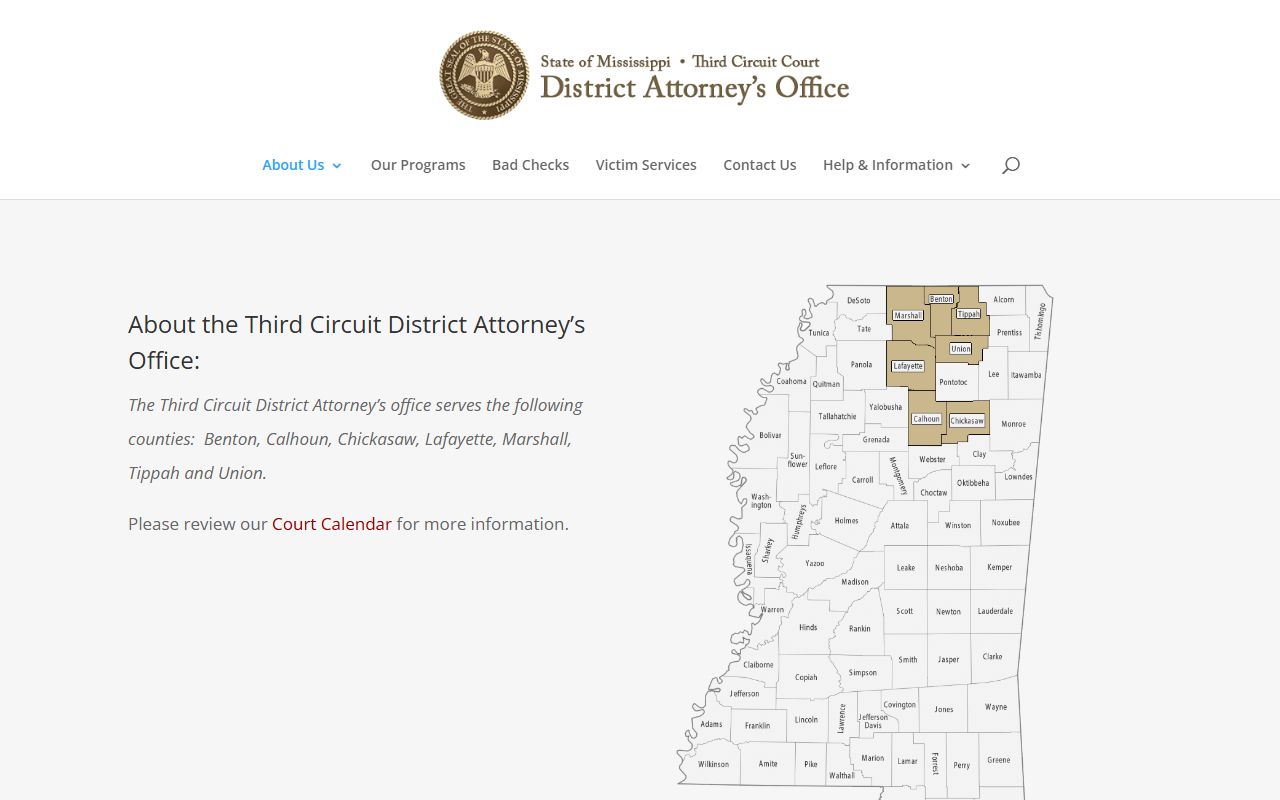
The choices the district attorney makes about charging, pleas, and diversion drive much of what later appears in a Chickasaw County criminal court record. The steps below put the search in order.
- Set the court level. Felony cases belong with Circuit Court, while traffic and misdemeanor matters sit in Justice Court or Municipal Court.
- Set the district. A file may route to Houston in the First District or to Okolona in the Second District.
- Check Mississippi Electronic Courts through PAMEC for electronic Circuit Court cases, which usually needs a registered login.
- Open the case to read the docket, the plea, the disposition, and the sentence.
- Call or visit the Circuit Clerk for a certified copy, or for any record not posted online.
State inmate status is a separate search. The Mississippi Department of Corrections lookup finds people in state custody by name or MDOC ID, which can confirm that a sentence in the court record was carried out.
Charges vs Convictions in Criminal Records
Being charged is not the same as being convicted. A Chickasaw County criminal court record can list charges that were later dropped, dismissed, or ended in acquittal. A charge is only an accusation that a Chickasaw County court has not yet tested. A conviction is the result of a guilty plea or a guilty verdict. Reading the disposition line matters more than reading the charge line.
| Charge | Conviction | |
|---|---|---|
| Stage | Accusation at the start | Plea or verdict at the end |
| Burden of Proof | Probable cause | Proof beyond a reasonable doubt |
| What It Means | The case is open or pending | Guilt has been established |
| Public Record | Yes, in most cases | Yes |
| May Be Expunged | Often, if dismissed or acquitted | Only for offenses the statute allows |
A docket flagged Nolle Pros Pending or Case Closed without a guilty entry is not a conviction. When in doubt, ask the clerk to confirm the final disposition before treating any charge as proven.
Reading Dispositions and Sentences
The disposition is the heart of a criminal court record because it states how the case ended. Sentences then explain what the defendant owes or must serve. A few short terms carry most of the meaning, and they show up across Chickasaw County criminal files in plain form.
- Guilty
- The defendant pleaded guilty or was found guilty, creating a conviction.
- Not Guilty
- A trial ended in acquittal, and the charge did not become a conviction.
- Dismissed
- The court dropped the charge, often on a motion or for lack of proof.
- Nolle Prosequi
- The prosecutor chose not to pursue the charge.
- Nolo Contendere
- A no-contest plea that accepts the penalty without admitting guilt.
- Probation
- Court-ordered supervision used instead of, or after, time in custody.
- Restitution
- Money the defendant must pay to compensate a victim.
A sentence may stack several of these. A felony file might show a custody term with MDOC, a probation period, fines, court costs, and restitution all in one order. The financial lines and custody flags on the docket confirm what was actually imposed.
Third Circuit Pretrial Intervention and DA Contacts
Some Chickasaw County felony cases never end in a standard conviction because the defendant enters pretrial intervention. The Third Circuit District Attorney runs this program under state law for non-violent felony offenders. It lasts a minimum of one year and a maximum of three years. Participants report on a schedule, pay a supervision fee, submit to drug testing at their own cost, and pay restitution where it applies. Successful completion leads to dismissed charges and possible expunction, while failure sends the case back to the docket for prosecution.
That program explains why a record may read Pretrial Interv Pending for a long stretch, then close as dismissed. The office also runs a Bad Check Unit that handles worthless-check restitution. The DA office posts attorney and staff profiles for the prosecutors assigned to Chickasaw County.
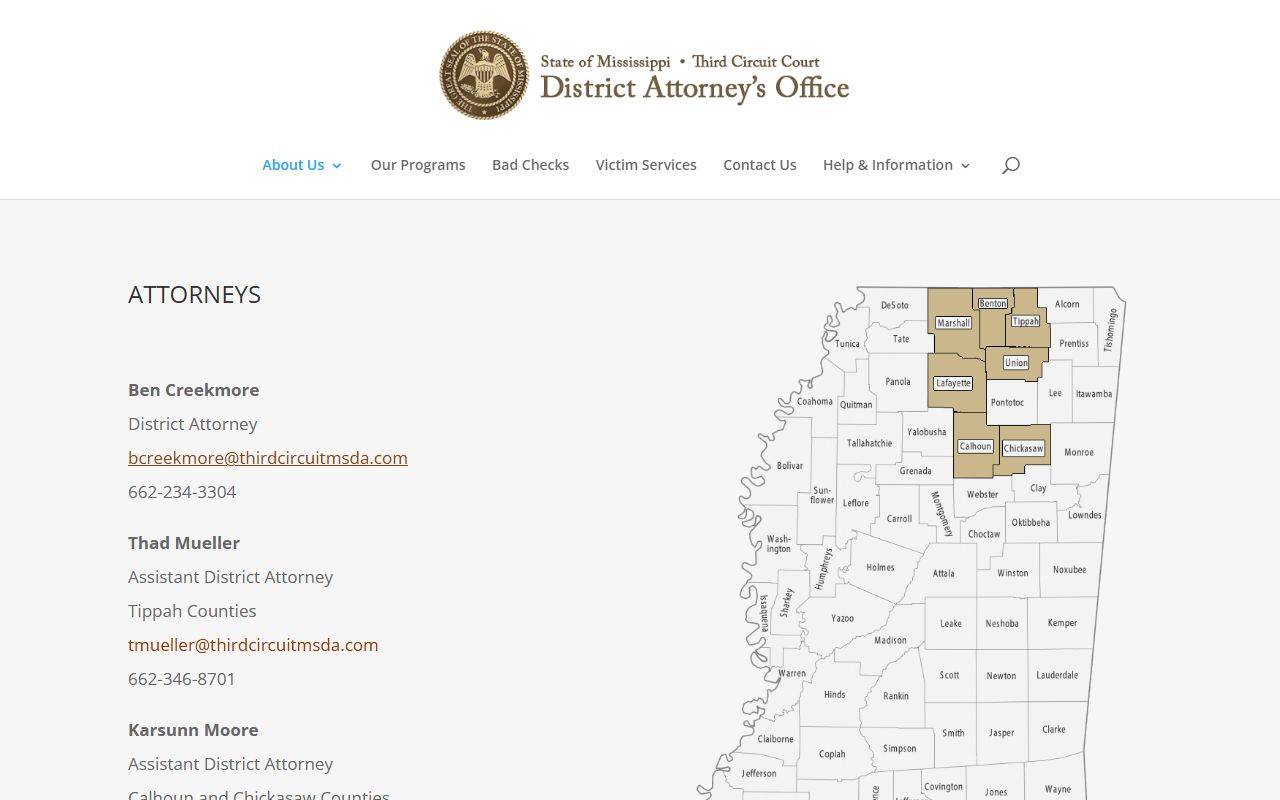
The Assistant District Attorney for Calhoun and Chickasaw Counties is Karsunn Moore, supported by an investigator and a victims advocate who cover the same area. Their office handles the charging and program decisions reflected in local case files.
Sealed vs Expunged Criminal Records
Not every Chickasaw County criminal court record stays open to the public. Two tools limit access, and they work in different ways. A sealed case is hidden from ordinary view but still exists. An expunged record is removed from public access under court order, so eligible cases are treated as though they never happened. Mississippi Code Section 99-19-71 sets the rules for expunction, and the statute is offense-specific.
| Sealed | Expunged | |
|---|---|---|
| Visibility | Hidden from public view | Removed from public access by order |
| The File | Still exists, access limited | Treated as if it never existed |
| Law Enforcement | Limited access | Very limited access |
| Eligibility | By statute or court order | Dismissed, acquitted, or qualifying convictions under Section 99-19-71 |
| Where to File | The court holding the case | The court where the case or conviction occurred |
In Chickasaw County, a request begins in the court that held the matter. Lower-level cases go to Justice Court or Municipal Court, while felony cases go to Circuit Court. The clerk can explain what petition or order the court needs, though staff cannot promise that any reader qualifies.
Public Access to Chickasaw County Criminal Court Records
Mississippi law favors open public records, and most criminal case files in Chickasaw County are public once a case is on the docket. Access still bends around court rules, sealed orders, youth confidentiality, and investigative exemptions. The practical path is to name the Chickasaw County office that holds the record, ask for the public portion, and expect a certified-copy fee. Beyond criminal cases, the county's broader court records follow the same access framework.
Key Statutes:
Miss. Code § 25-61-1 - State policy favors public access to public records unless a law provides otherwise.
Miss. Code § 25-61-5 - Public bodies must offer reasonable copy procedures and generally answer within seven working days.
Miss. Code § 99-19-71 - Governs expunction of eligible dismissed, acquitted, and certain conviction records.
Miss. Code § 43-21-251 - Keeps Youth Court records confidential except as youth-court law allows.
Note: a certified copy from the Circuit Clerk runs about two dollars per page under state fee law, so confirm the current cost before ordering a full transcript.
Restricted Criminal Court Records in Chickasaw County
Public access does not mean every criminal record in Chickasaw County is open online. Several categories are closed by law or held back by the court. Youth Court records are confidential and not a public lookup. Sealed and expunged cases are removed from ordinary view. Investigative reports and full criminal-history records are not public through routine requests, even when a related court file is open.
- Youth Court cases, confidential under state youth-court law.
- Sealed cases, open only with a court order or qualifying party status.
- Expunged cases, removed from public view by court order.
- Investigative reports, withheld under public-records exemptions.
- Criminal-history records, restricted to authorized background channels.
A defendant who cannot afford a lawyer has a right to appointed counsel in cases that may bring a loss of liberty. The court appoints counsel no later than the first appearance. People can confirm a defender through the Mississippi Office of State Public Defender directory.
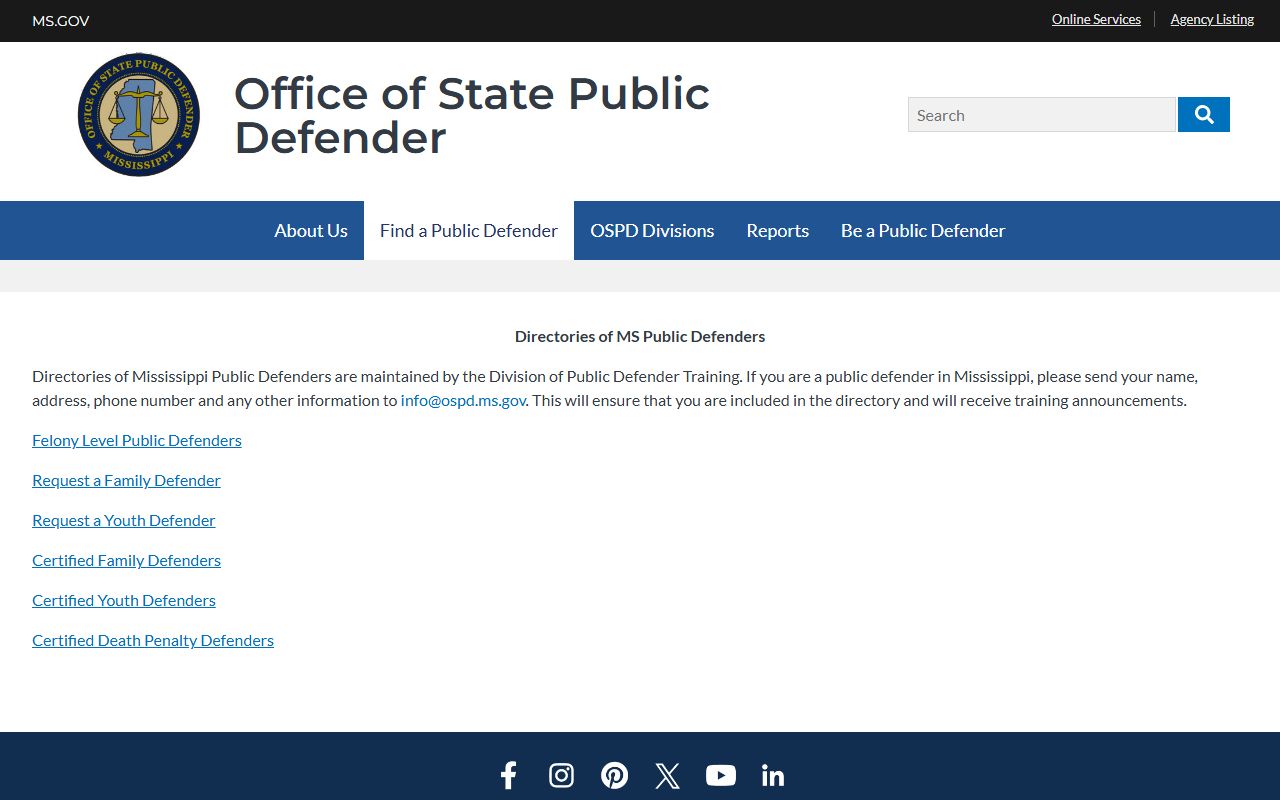
The listed felony public defender for Chickasaw County is Edward D. Lancaster, based in Houston. His appointment and the prosecutor's filings shape the case entries that fill a local criminal court record.
Important: Chickasaw County Court Records is not a consumer reporting agency, so its records cannot be used for employment, tenant, credit, or other FCRA-regulated screening.